
At first glance, the two businesses looked remarkably similar.
Both operated in the same locality.
Both had access to comparable equipment.
Both offered personal training support.
Both targeted working professionals looking to improve their health and fitness.
Yet one fitness studio consistently attracted walk-in enquiries, maintained a waiting list for certain programs, and comfortably charged ₹25,000 per year for memberships.
The other struggled to convert enquiries despite charging less than half the price.
The difference wasn’t infrastructure.
The difference wasn’t equipment.
The difference wasn’t even location.
The difference was communication.
This case study explores how communication, positioning, and business perception can dramatically influence commercial outcomes, even when the operational offering appears similar.
Industry
Healthcare & Wellness
Location
India
Services Delivered
Brand & Positioning Communication
Website Communication & Digital Presence
Sales & Strategic Communication Assets
Authority Content Strategy
Client Background
The client was an independently owned fitness studio operating in a highly competitive local market.
With over six years of operations, the studio had invested consistently in equipment, facilities, and coaching staff. Membership pricing was positioned at approximately ₹12,000 annually, making it one of the more affordable options in the area.
Despite competitive pricing and quality infrastructure, membership growth remained inconsistent.
Walk-ins were limited.
Enquiry-to-membership conversion rates were low.
The leadership team believed pricing, competition, and local market conditions were the primary reasons.
Our initial observations suggested otherwise.
The Challenge
Unlike many engagements, this project began proactively.
During our review of local businesses and communication patterns, we noticed a striking difference between two fitness brands operating within a similar geography.
One studio charged nearly double the annual membership fee.
Yet it appeared to attract stronger demand.
We conducted a communication audit of both businesses.
The findings were revealing.
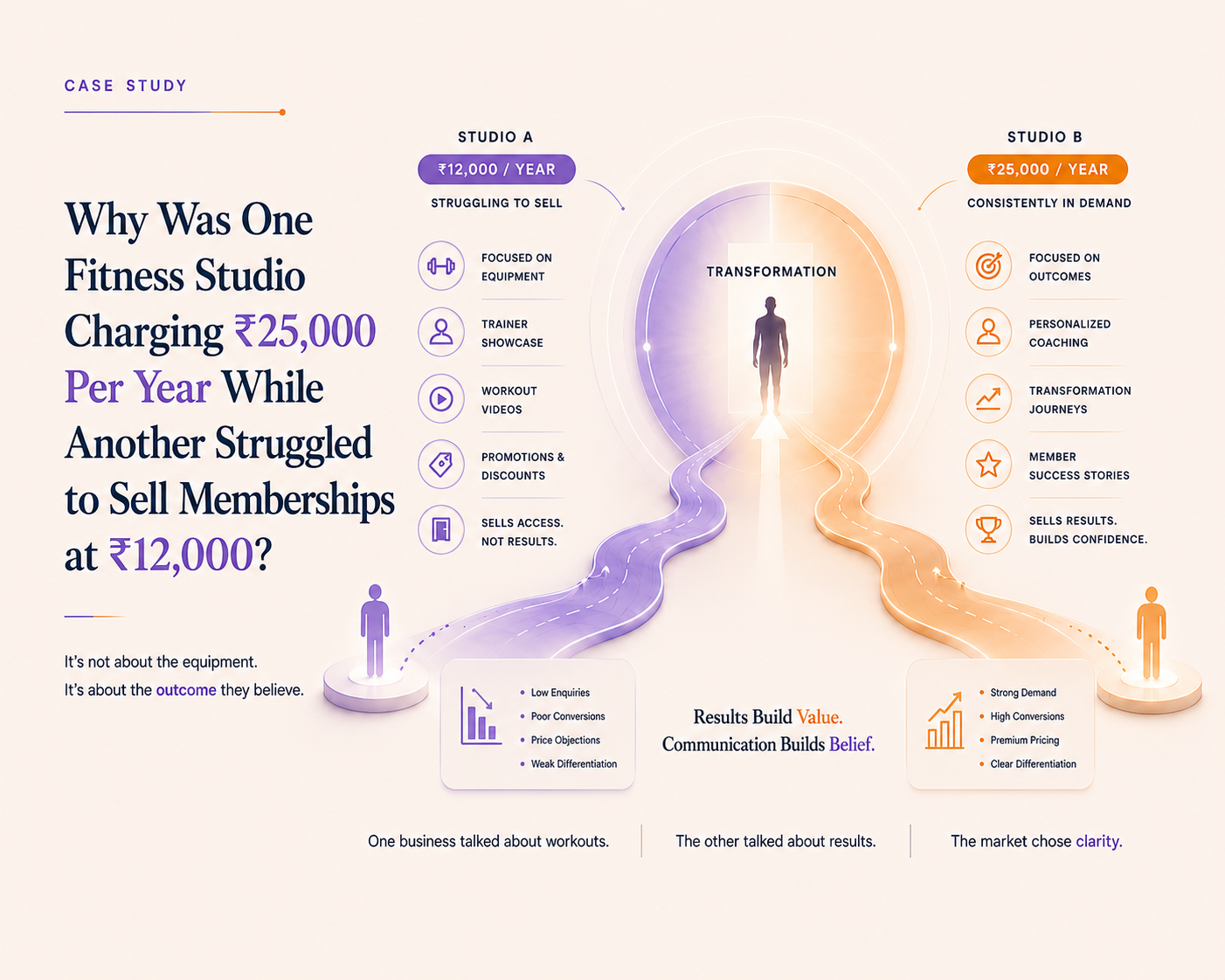
The higher-priced studio communicated:
- Fitness outcomes
- Health transformation
- Lifestyle improvement
- Accountability
- Coaching methodology
- Success stories
- Member journeys
The lower-priced studio communicated:
- Equipment
- Facilities
- Membership plans
- Trainer photographs
- Bodybuilding content
- Workout videos
- Promotional offers
One brand was selling results.
The other was selling access.
One was communicating solutions.
The other was communicating features.
Our Diagnosis
During the audit, we discovered that the lower-priced studio’s communication was heavily centered around coaches, workouts, and gym infrastructure.
Much of the social media content focused on trainers showcasing their physiques, workout routines, and fitness achievements.
While impressive, this communication primarily appealed to a small segment of fitness enthusiasts.
The broader audience was asking very different questions:
- Can I lose weight?
- Can I become healthier?
- Can I remain consistent?
- Will someone guide me?
- Can I fit fitness into my lifestyle?
- Will I actually see results?
Those questions were largely unanswered.
The business was communicating from the perspective of fitness professionals.
The audience was thinking from the perspective of everyday people.
This created three major challenges:
- Price-sensitive positioning
- Weak differentiation
- Low perceived value despite quality coaching
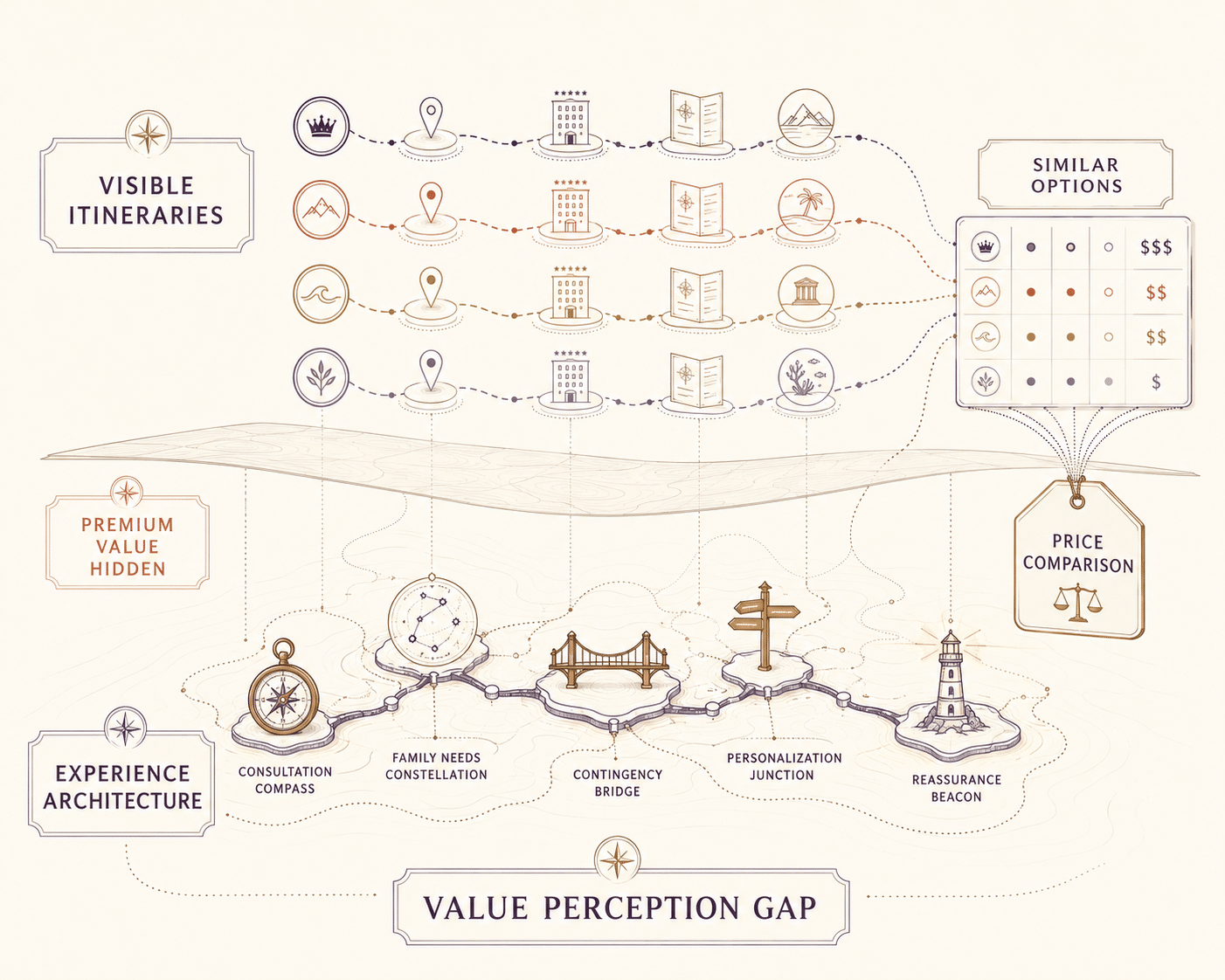
The business didn’t have a pricing problem.
It had a value communication problem.
Strategic Intervention
We recommended repositioning the studio around outcomes rather than infrastructure.
The objective was to transform perception from “a place to work out” into “a place that helps people achieve meaningful health outcomes.”
The engagement included:
- Positioning audit
- Audience perception mapping
- Communication strategy development
- Website communication restructuring
- Sales communication refinement
- Authority content framework
- Member success storytelling
- Program architecture communication
What Changed?
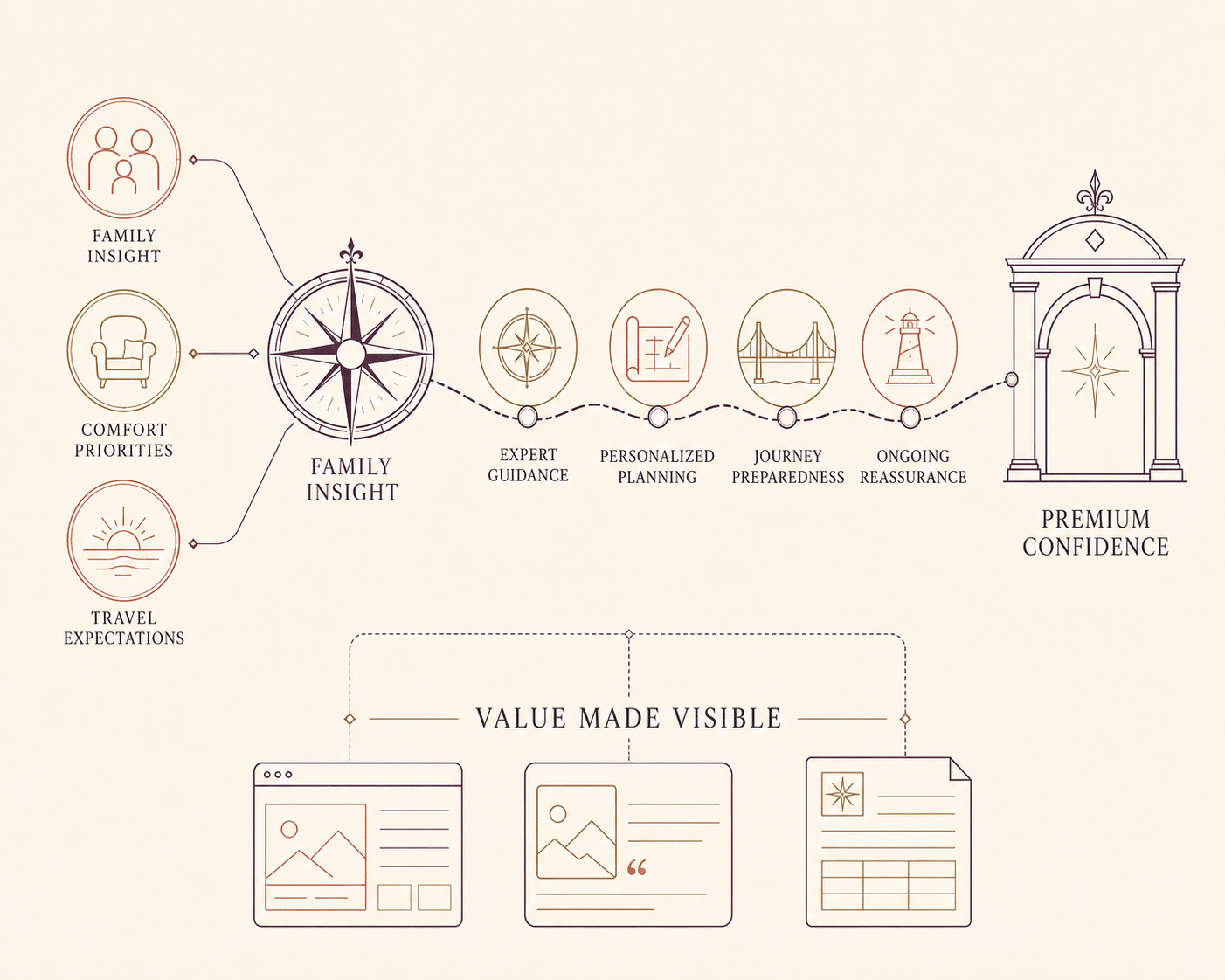
The first shift involved changing what the business talked about.
Instead of focusing primarily on equipment and trainers, communication began focusing on members and outcomes.
The revised narrative emphasized:
- Weight management
- Lifestyle transformation
- Accountability systems
- Personalized coaching
- Sustainable fitness habits
- Health outcomes
The studio introduced structured fitness journeys and clearly communicated how members progressed from their current state to desired outcomes.
Member stories became more visible than trainer stories.
Educational content replaced promotional content.
The website and sales materials were redesigned to answer a fundamental question:
“What results can I realistically expect if I join?”
The objective was not to make the studio look bigger.
It was to make the outcomes look clearer.
Business Impact
The repositioning significantly improved how prospective members perceived the business.
Key outcomes included:
- Stronger value perception
- Reduced price objections
- Improved enquiry quality
- Higher conversion confidence during membership discussions
- Better alignment between service quality and market perception
- Increased authority within the local fitness market
Most importantly, the business stopped competing against gyms and started competing as a results-focused coaching brand.
The conversation shifted from:
“Why does your membership cost more?”
to
“How does your program help people achieve these results?”
Leadership Insight
Most businesses believe customers buy products.
In reality, customers buy outcomes.
The higher-priced fitness studio was never selling equipment.
It was selling confidence, accountability, health, and transformation.
The lower-priced studio had similar resources.
What it lacked was communication that helped prospective clients understand the value of those resources.
When businesses communicate outcomes instead of features, price often becomes a secondary conversation.