
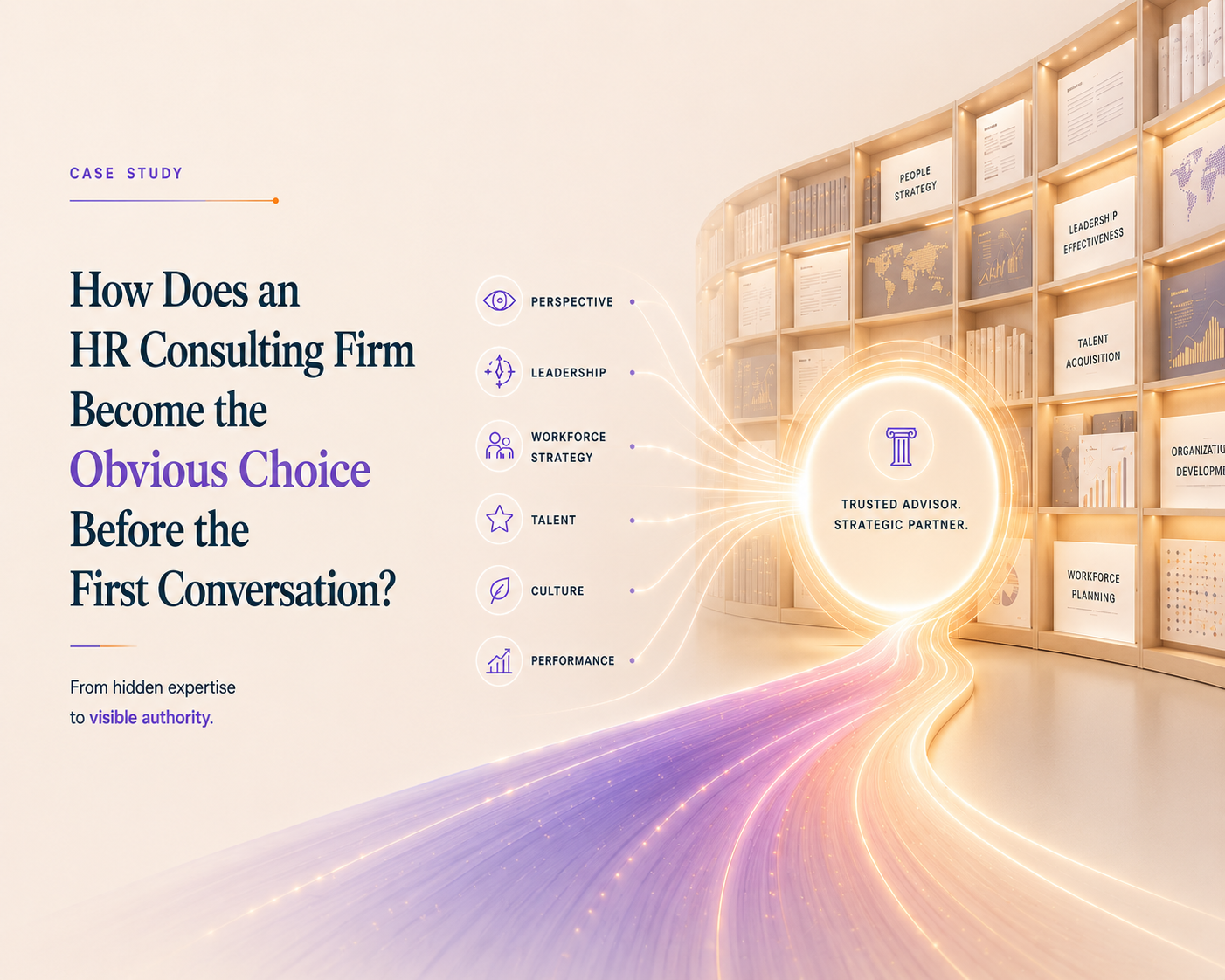
This was the challenge facing a Germany-based HR consulting firm that had built a strong reputation over nearly eight years but found that its digital presence was not reflecting the depth of expertise it had developed. What appeared to be a visibility challenge was ultimately an authority-building and positioning challenge.
Industry
Consulting & Professional Services
Location
Germany
Services Delivered
Brand & Positioning Communication
Website Communication & Digital Presence
Founder & Executive Thought Leadership
Authority Content Strategy
Sales & Strategic Communication Assets
Client Background
The client was a Germany-based HR consulting and people advisory firm with over eight years of experience helping mid-sized organizations improve hiring outcomes, leadership capability, employee retention, and workforce planning.
Operating primarily across Germany and neighboring European markets, the firm had successfully worked with more than 100 organizations across manufacturing, technology, professional services, and logistics sectors.
The business had grown steadily through referrals, professional networks, and long-term client relationships.
The expertise existed.
The reputation existed.
The challenge was making that expertise visible to prospective clients who had never worked with the firm before.
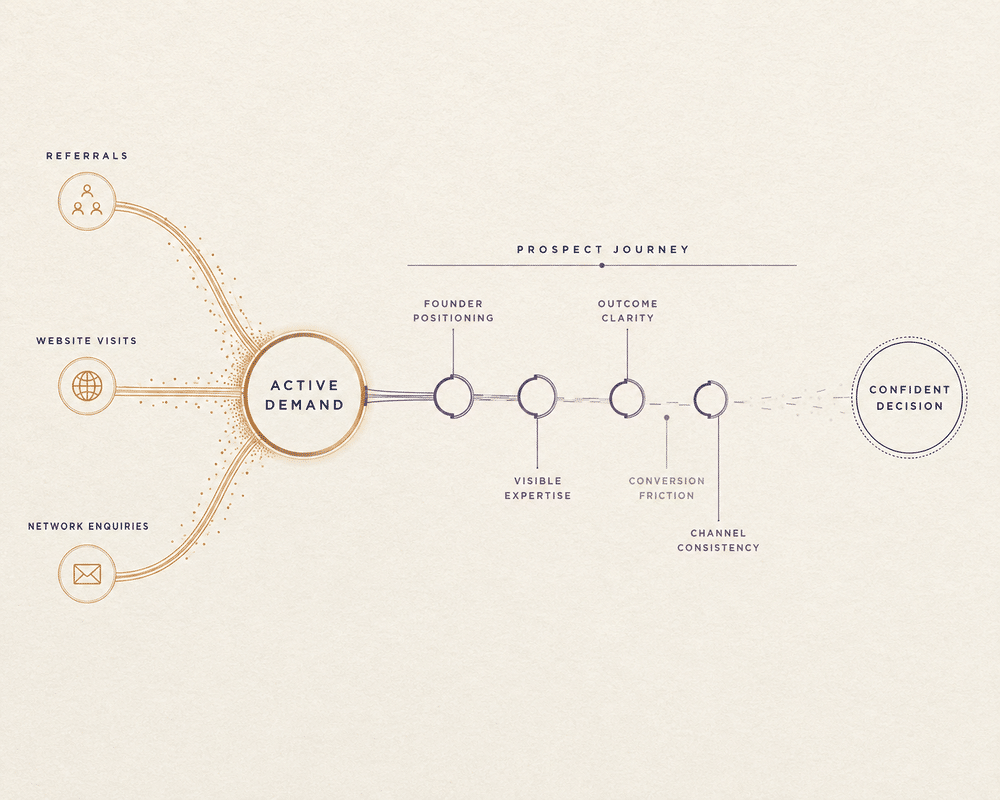
As the consulting market became increasingly competitive, leadership noticed that buyers were conducting significantly more research before engaging advisory firms. Potential clients were evaluating multiple consultants online before scheduling conversations.
The firm realized that credibility was increasingly being established before the first meeting—not during it.
The Challenge
The leadership team initially approached us to improve their website communication and strengthen their market visibility.
Their concern was straightforward:
“We have the expertise and client success stories. The challenge is helping prospective clients recognize that before they speak with us.”
During our audit, we reviewed:
- Website communication
- LinkedIn presence
- Sales presentations
- Service pages
- Thought leadership assets
- Competitor positioning across Germany, the UK, and the Netherlands
The findings were revealing.
The firm’s communication focused heavily on:
- Service descriptions
- HR processes
- Consulting capabilities
- Talent management services
- Organizational development offerings
While technically accurate, very little communication demonstrated the firm’s expertise, methodology, or perspective.
More importantly, it failed to answer the questions prospective clients were actually asking:
- Why should we trust this firm?
- What makes their approach different?
- What insights do they bring beyond traditional HR practices?
- How do they think about leadership, talent, and organizational performance?
- Why should we choose them over another consulting firm?
The market could see services.
It could not clearly see expertise.
Our Diagnosis
During our communication audit, we discovered that nearly 70% of the website content focused on describing services and capabilities, while very little content demonstrated original thinking, consulting philosophy, or strategic expertise.
At the same time, our competitor research revealed a noticeable trend.
The consulting firms attracting the strongest engagement were not necessarily the largest firms.
They were the firms making their expertise visible through:
- Founder visibility
- Thought leadership
- Educational content
- Industry insights
- Clear market positioning
Research from multiple professional services studies has consistently shown that decision-makers consume several pieces of content before initiating conversations with advisors and consultants.
Yet the firm’s expertise remained largely hidden behind generic service descriptions.
This created three major challenges:
- Strong consulting capability but weak visible authority
- Expertise hidden behind operational language
- Heavy dependence on referrals despite changing buyer behaviour
The firm did not have a credibility problem.
It had an authority visibility problem.
Strategic Intervention
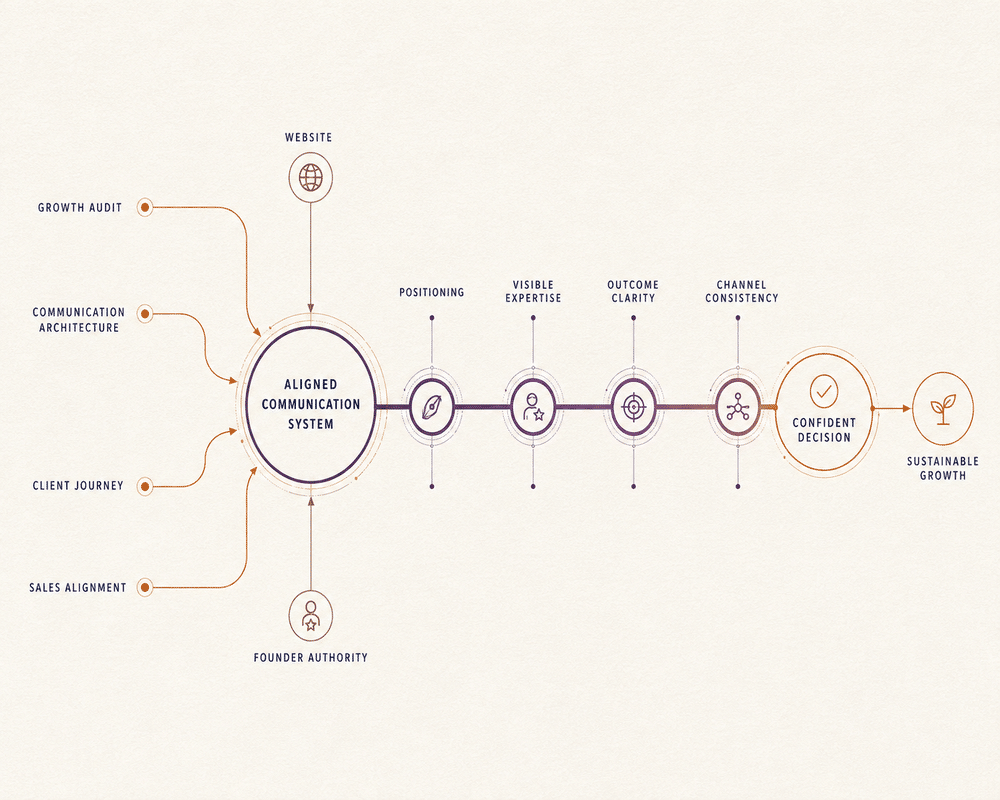
Rather than focusing on isolated communication assets, we recommended an authority-led positioning strategy.
The objective was to help the firm establish trust long before a prospective client scheduled a conversation.
The engagement included:
- Positioning audit
- Messaging architecture development
- Website communication strategy
- Founder authority positioning
- LinkedIn thought leadership framework
- Industry insight content strategy
- Client journey trust mapping
- Sales communication refinement
- Authority-led content ecosystem development
What Changed?
The first shift involved changing what the firm communicated publicly.
Instead of focusing primarily on consulting services, the communication strategy began highlighting expertise, perspectives, and strategic thinking.
The revised positioning emphasized:
- Workforce strategy expertise
- Leadership effectiveness
- Talent retention insights
- Organizational performance
- Business-driven HR transformation
- Long-term people strategy
The website was restructured to showcase expertise before services.
Rather than immediately explaining what the firm did, the communication began demonstrating how the firm thought.
Founder visibility became a key part of the authority-building strategy.
We developed a structured thought leadership framework around topics such as:
- Future of work
- Leadership development
- Talent acquisition trends
- Employee retention
- Organizational effectiveness
- Workforce planning
Educational articles, founder insights, and industry perspectives helped establish the firm as a trusted advisor rather than another consulting provider.
Sales communication was also redesigned to better articulate the firm’s unique methodology and consulting philosophy.
The objective was not simply to attract attention.
It was to build confidence.
Business Impact
The repositioning helped create stronger alignment between the firm’s expertise and how prospective clients perceived it.
Key outcomes included:
- Stronger authority within the HR consulting market
- Improved trust before initial consultations
- Greater differentiation from competing firms
- Increased consistency across website, LinkedIn, and sales communication
- Better quality conversations with prospective clients
- Stronger founder visibility and industry credibility
- A more sustainable authority-building ecosystem
Most importantly, the firm stopped relying solely on referrals to communicate expertise and began building trust through a deliberate and visible market presence.
Leadership Insight
Most consulting firms believe their expertise speaks for itself.
In reality, expertise must first become visible.
The organizations that consistently win trust are not always the most experienced.
They are the ones that make their thinking accessible before a sales conversation ever takes place.
Authority is not built when a prospect becomes a client.
Authority is built long before the first conversation begins.