
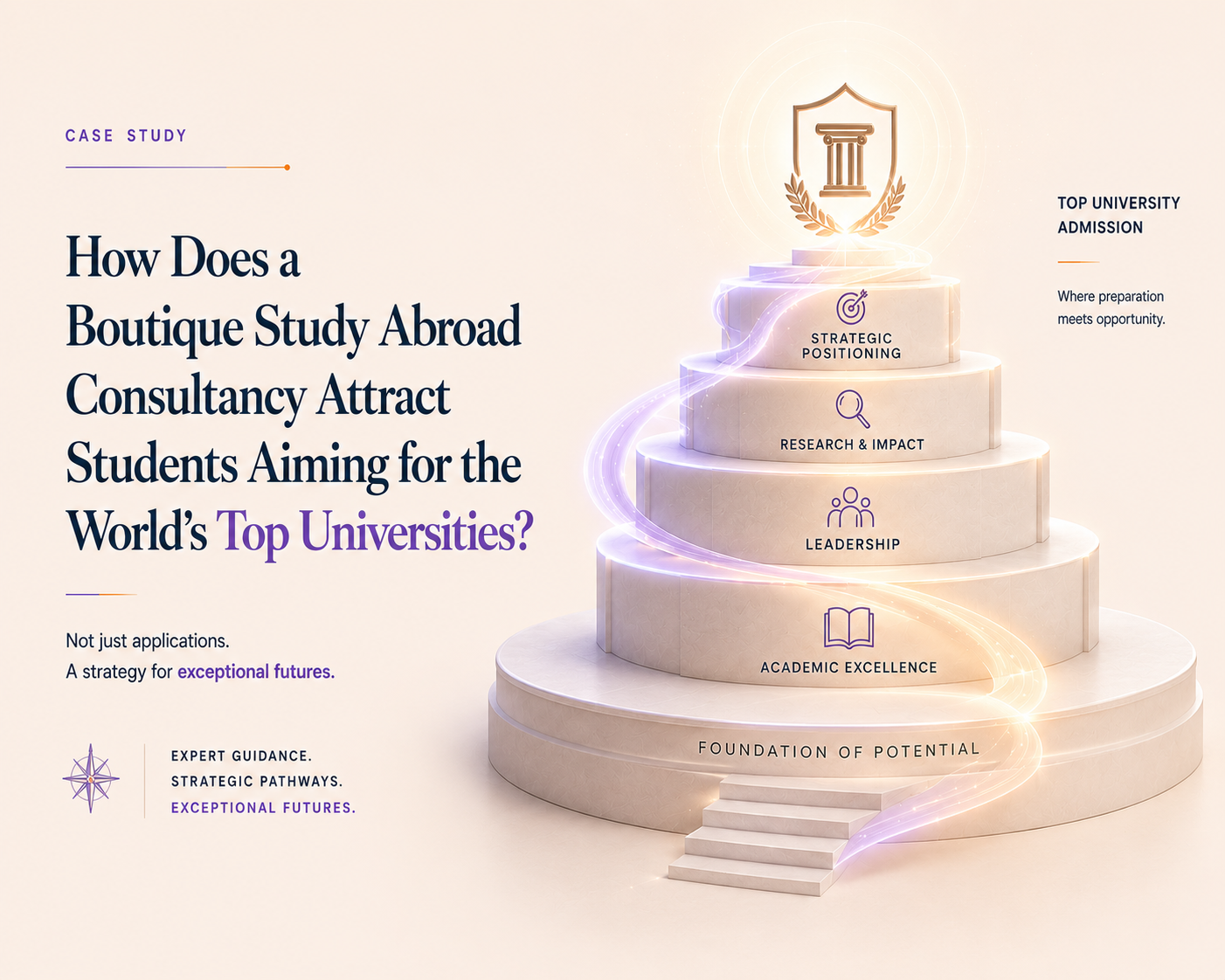
Every year, thousands of students and parents evaluate consultants, counsellors, and admissions advisors while making one of the most important decisions of their lives. Most providers promise university admissions support, visa guidance, and application assistance.
Very few successfully position themselves as trusted advisors for highly ambitious students targeting the world’s leading universities.
This was the challenge facing a Dubai-based boutique study abroad consultancy founded by an experienced admissions advisor who wanted to build a very different kind of business.
Rather than serving high application volumes, the consultancy was focused on helping students secure admissions into some of the world’s most respected institutions.
The expertise existed.
The positioning did not.
What initially appeared to be a visibility challenge ultimately became a brand, authority, and trust-building challenge.
Industry
Consulting & Advisory
Location
Dubai, UAE
Services Delivered
Brand & Positioning Communication
Website Communication & Digital Presence
Founder Thought Leadership
Authority Content Strategy
Sales & Strategic Communication Assets
Client Background
The client was a Dubai-based boutique study abroad consultancy with approximately two years of operations.
The founder brought years of admissions consulting experience and had intentionally designed the business around a highly selective model.
Unlike traditional education agencies focused on processing large volumes of applications, the consultancy specialized in helping ambitious students pursue admissions into highly ranked universities across the United States, United Kingdom, Canada, Europe, and other leading global education destinations.
The vision was clear.
The founder wanted to become known as a trusted admissions advisor for students targeting the world’s top universities.
However, while significant effort had been invested in student outcomes and personalized consulting, very little attention had been given to brand positioning, authority building, or communication strategy.
The website looked similar to dozens of traditional study abroad agencies.
The communication focused heavily on applications, SOPs, visas, and admission services.
The expertise that differentiated the consultancy remained largely invisible.
The Challenge
The founder initially approached us to improve visibility and enquiry quality.
The concern was not generating more enquiries.
The concern was attracting the right enquiries.
The consultancy wanted to work with highly motivated students targeting competitive universities and selective academic pathways.
However, its communication was attracting a broad mix of students because the brand appeared similar to traditional admissions agencies.
During our audit, we reviewed:
- Website communication
- Founder visibility
- Competitor positioning
- Student journey communication
- Content ecosystem
- Digital trust signals
- Search visibility
The findings revealed a deeper issue.
The problem wasn’t awareness.
The problem was positioning.
The market was seeing another study abroad consultancy.
The founder was building a specialized admissions advisory practice.
Those are two very different businesses.
Our Diagnosis
During our market analysis, we studied both regional and international education consultancies serving students targeting top universities.
A clear pattern emerged.
The firms attracting high-intent students were not necessarily spending the most on marketing.
They were building trust through:
- Founder authority
- Educational thought leadership
- Admissions expertise
- Student success frameworks
- University-specific insights
- Clear specialization
At the same time, nearly 75% of the consultancy’s communication focused on operational services such as:
- Applications
- SOP support
- Visa assistance
- Documentation
- Admission processes
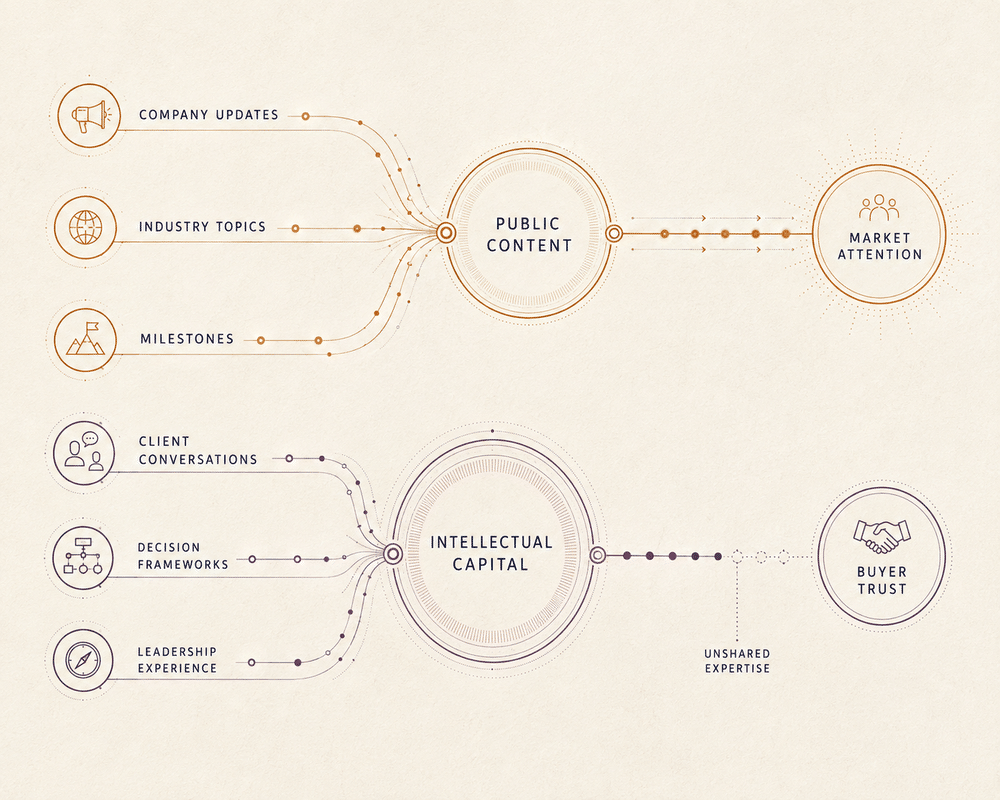
Very little communication demonstrated:
- The founder's expertise
- Admissions strategy
- Student profiling methodology
- Competitive admissions guidance
- Long-term academic planning
The consultancy had expertise.
The market could not clearly see it.
This created three key challenges:
- Premium expertise but generic market positioning
- Strong advisory capabilities but weak visible authority
- High-quality services attracting broad-market enquiries
The business did not have a visibility problem.
It had a perception problem.
Strategic Intervention
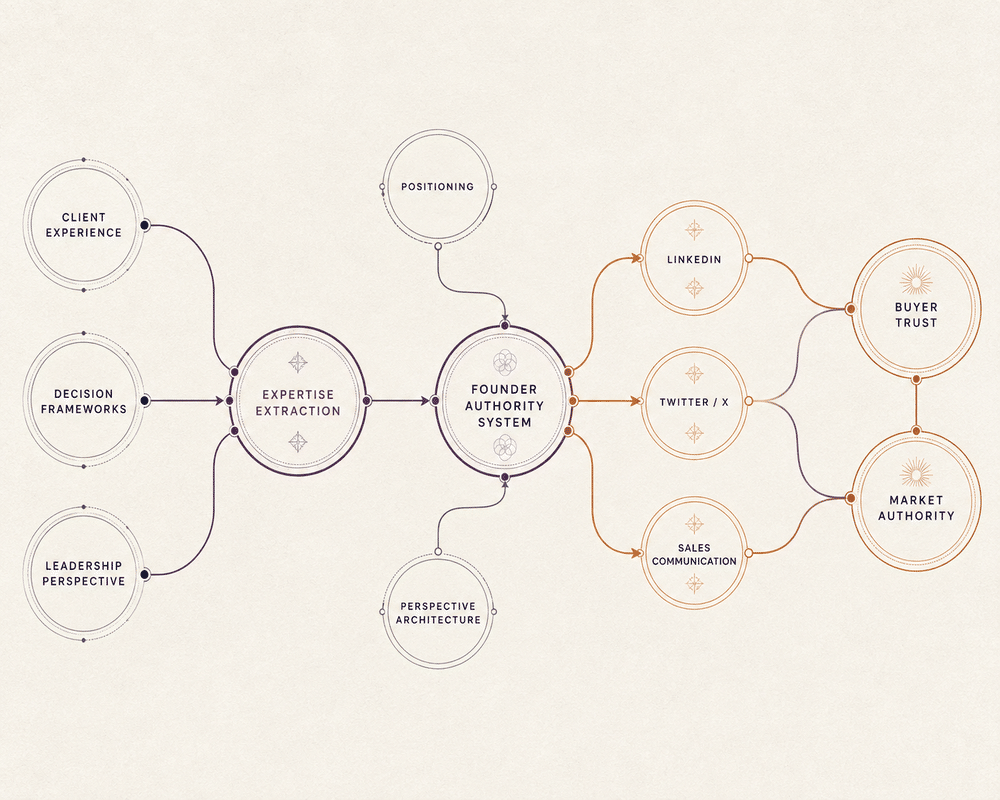
Rather than focusing solely on marketing assets, we recommended a positioning-led authority-building strategy.
The objective was to help the consultancy establish itself as a trusted advisor for students targeting highly ranked universities rather than another admissions processing agency.
The engagement included:
- Positioning audit
- Messaging architecture development
- Website communication strategy
- Founder authority positioning
- Educational content framework
- Student journey trust mapping
- Authority-led SEO strategy
- Sales communication refinement
- Thought leadership ecosystem development
What Changed?
The first shift involved changing what the consultancy communicated.
Instead of leading with operational services, the communication began emphasizing expertise, strategy, and outcomes.
The revised narrative focused on:
- Top university admissions strategy
- Student profiling and fitment
- Academic pathway planning
- Competitive admissions preparation
- University selection expertise
- Long-term educational outcomes
The website was restructured to communicate authority before services.
Founder visibility became a central part of the communication strategy.
A structured thought leadership framework was introduced around topics such as:
- Admissions competitiveness
- University selection strategies
- Scholarship opportunities
- Student profile building
- Global education trends
- Career-aligned academic planning
Educational content became a key trust-building asset.
Rather than selling services, the brand began demonstrating expertise.
The objective was not to attract more students.
It was to attract better-aligned students.
Business Impact
The repositioning helped create stronger alignment between the founder’s expertise and how prospective students perceived the consultancy.
Key outcomes included:
- Clearer differentiation from traditional admissions agencies
- Stronger authority within the premium study abroad segment
- Improved trust before consultations
- Better alignment between brand positioning and business goals
- Higher-quality student enquiries
- Increased founder visibility and credibility
- Stronger foundation for long-term authority building
Most importantly, the consultancy stopped competing as an application support provider and began positioning itself as a trusted admissions advisor for students pursuing ambitious academic goals.
Leadership Insight
Many education consultancies try to attract more students.
The most successful boutique consultancies focus on attracting the right students.
When expertise is hidden behind generic service descriptions, the market struggles to recognize the value being offered.
The strongest education brands are rarely the ones serving the highest volume.
They are often the ones with the clearest positioning, strongest authority, and most visible expertise.