
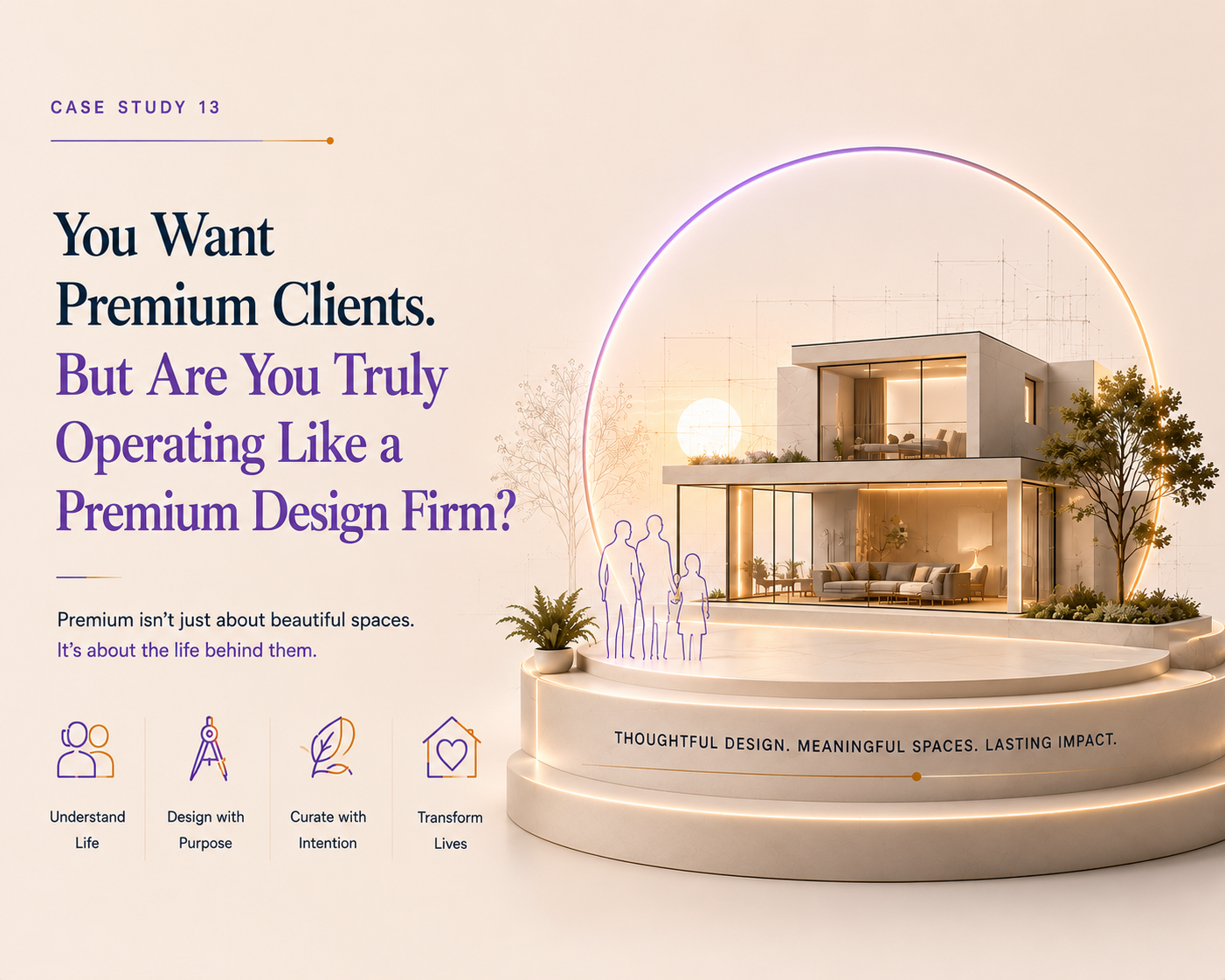
The natural assumption is that the solution lies in better branding, a stronger website, more visibility, or a more premium-looking portfolio.
But premium clients rarely choose a design firm because of visuals alone.
They choose firms that demonstrate a deeper understanding of how people live, what spaces mean to them, and how design decisions shape their everyday lives.
This was the challenge facing a Mumbai-based architecture and interior design studio with nearly a decade of experience.
The founder wanted to attract larger projects, command higher fees, and position the studio within a more premium segment of the market.
What began as a communication and positioning engagement evolved into one of the longest and most transformative projects we have undertaken.
Industry
Founder-Led & Growing Businesses
Location
Mumbai, India
Services Delivered
Discovery & Business Audit
Competitor Positioning Analysis
Brand & Positioning Communication
Client Experience Mapping
Founder Authority Building
Website Communication Strategy
Project Storytelling Framework
Premium Service Positioning
Client Background
The client was a boutique architecture and interior design studio with over nine years of experience delivering residential, hospitality, and commercial projects across India.
The firm’s work was strong.
The portfolio showcased beautifully executed spaces.
Clients were satisfied.
Referrals continued to generate business.
However, the founder wanted to move into a different category of engagement.
The aspiration was not simply to acquire more projects.
The aspiration was to work with clients who appreciated design thinking, valued expertise, trusted the process, and were willing to invest accordingly.
The founder believed the challenge was largely one of communication and visibility.
Before making recommendations, we conducted a detailed audit.
The Challenge
The engagement began with a comprehensive review of the firm’s:
- Website communication
- Project presentations
- Client onboarding process
- Proposal structure
- Discovery meetings
- Founder visibility
- Competitor positioning
- Customer journey
We also studied premium architecture and interior design firms across India, Dubai, Singapore, and Europe.
The findings were revealing.
The business wanted premium clients.
However, several aspects of the experience still reflected how a traditional project-execution firm would operate.
This wasn’t a question of design capability.
It was a question of positioning, perception, and experience.
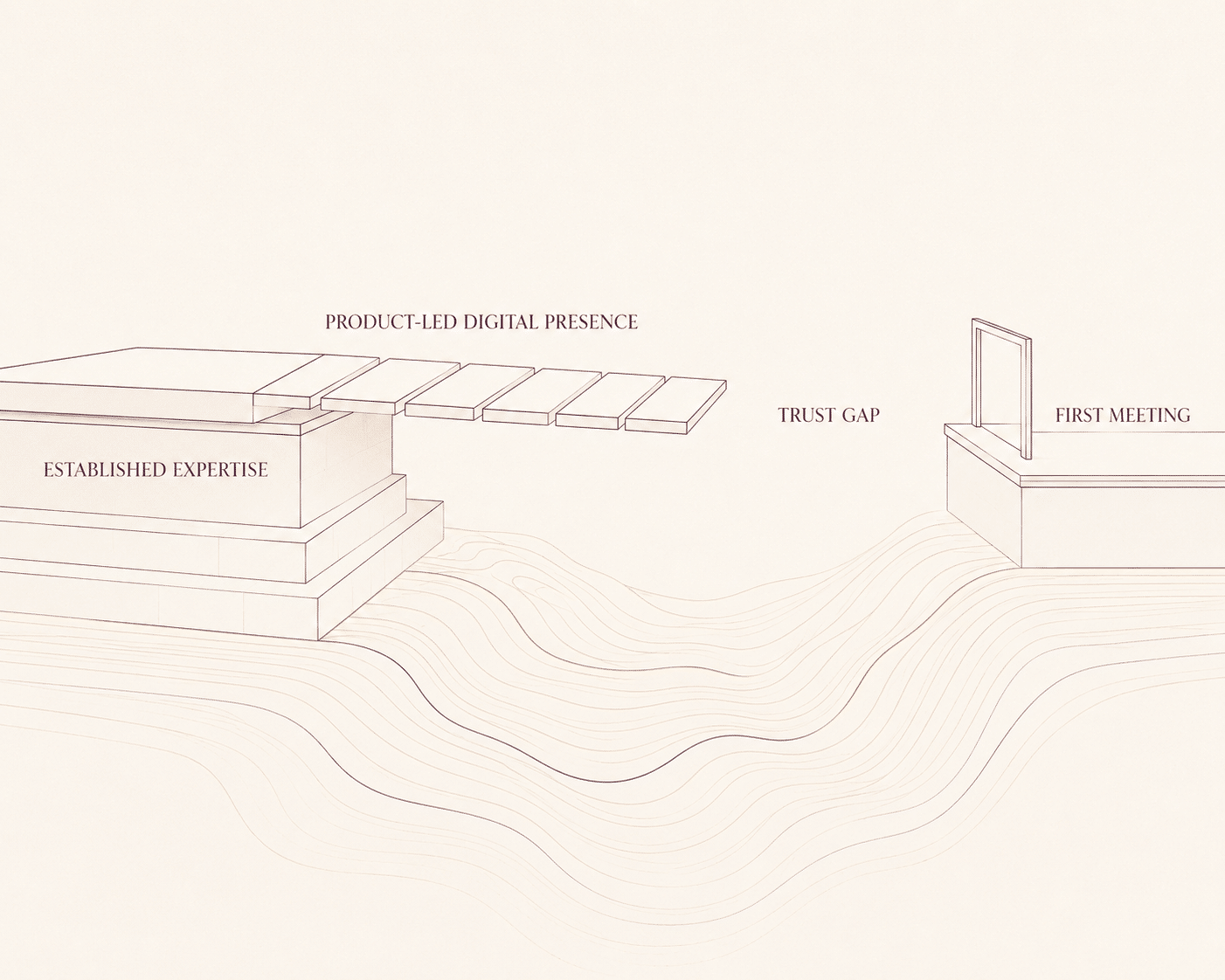
The gap wasn’t just how the business was communicating.
The gap was between the positioning it wanted to own and the experience clients were actually receiving.
What We Found During Discovery
One observation changed the direction of the entire engagement.
The Studio Was Designing Spaces. Premium Firms Were Designing Life Stories.
The strongest firms we studied rarely began conversations with layouts, furniture selections, materials, or aesthetics.
Instead, they spent considerable time understanding:
- Why the client purchased the property
- What stage of life they were entering
- How the family lived
- What challenges existed in their current home
- How the space needed to evolve over the next decade
- What emotional connection they wanted with the property
The design process extended far beyond architecture and interiors.
It became an exercise in understanding people.
Their communication reflected this.
The client journey reflected this.
Their positioning reflected this.
The studio’s projects were strong, but much of this deeper thinking remained invisible.
The Portfolio Showed Beautiful Outcomes. It Didn’t Show the Thinking Behind Them.
The firm’s website and project presentations showcased completed work.
Prospective clients could admire the final result.
What they could not easily understand was:
- Why certain decisions were made
- How challenges were solved
- What compromises were avoided
- How the design responded to the client's lifestyle
- What expertise guided the project
The portfolio demonstrated capability.
It did not demonstrate the depth of thinking that created that capability.
The Studio Wanted Premium Pricing. Parts of the Experience Still Felt Like Project Execution.
This was perhaps the most important finding of the entire audit.
Premium clients do not simply hire architects and designers to manage drawings, vendors, contractors, and execution timelines.
They expect guidance.
They expect clarity.
They expect expertise.
They expect confidence.
During our competitor analysis, we found that leading firms had positioned themselves as trusted design advisors rather than project managers.
Their involvement extended beyond execution.
They guided clients through:
- Lifestyle planning
- Design rationale
- Material philosophy
- Vendor selection
- Long-term maintenance considerations
- Future-proofing decisions
- Design stewardship throughout execution
In contrast, parts of the studio’s experience still revolved around coordination, execution updates, vendor discussions, and project management activities.
While necessary, these are often viewed by clients as operational responsibilities rather than premium value.
The opportunity was not to redesign the service.
The opportunity was to elevate the experience around the service.
The Founder Was the Firm’s Strongest Asset. Yet Largely Invisible.
Another significant observation emerged during the audit.
The founder possessed years of experience, a clear design philosophy, and a thoughtful approach to client engagement.
Yet very little of that expertise was visible online.
The market could see completed projects.
It could not see the thinking, philosophy, and decision-making behind them.
As a result, prospective clients often evaluated the studio based on visuals and pricing rather than expertise.
Our Diagnosis
At the conclusion of the audit, our recommendation surprised the client.
We advised against immediately investing in communication assets.
Instead, we recommended strengthening several aspects of the business experience before attempting premium positioning.
This included reviewing:
- Client discovery processes
- Proposal presentation frameworks
- Project communication standards
- Design storytelling
- Founder visibility
- Service architecture
- Customer experience consistency
The founder appreciated the feedback but decided not to proceed immediately.
Several months passed.
During that time, the leadership team reflected on the findings and continued observing the market.
Eventually, they returned.
This time with a different objective.
The goal was no longer to appear premium.
The goal was to build a business capable of sustaining premium positioning.
Strategic Intervention
What followed became a six-month transformation project.
One of the longest engagements we have undertaken.
The focus extended beyond communication and included:
- Competitor positioning analysis
- Premium client experience design
- Founder authority positioning
- Project storytelling framework
- Website communication strategy
- Proposal restructuring
- Thought leadership development
- Communication consistency framework
- Design experience enhancement
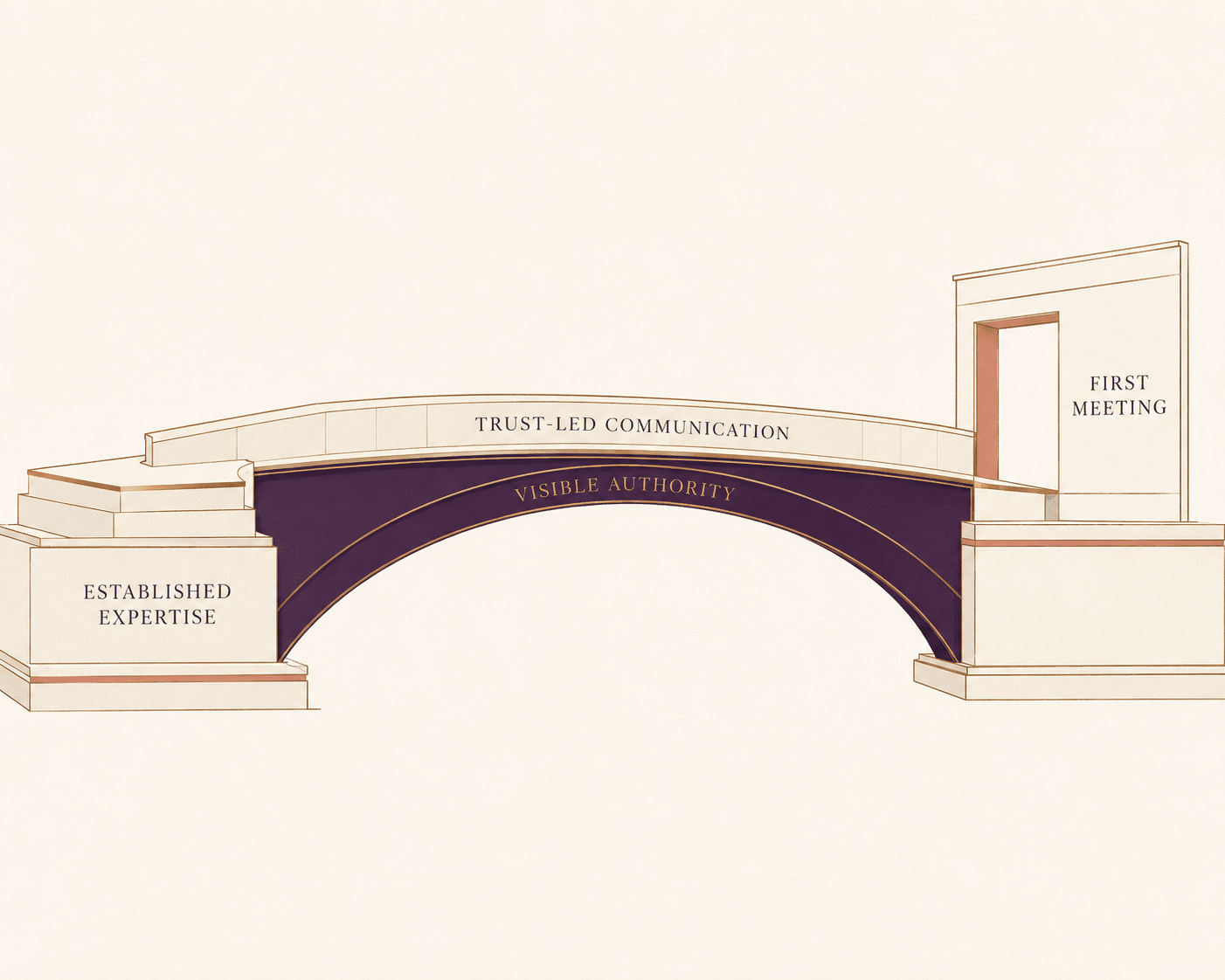
The objective was alignment.
Alignment between expertise, experience, positioning, and perception.
What Changed?
The first major shift involved changing how the firm presented its work.
Projects were no longer communicated as completed design assignments.
They were communicated as transformation journeys.
Communication began highlighting:
- The client's original challenge
- Lifestyle requirements
- Design decisions
- Strategic thinking
- Material selection rationale
- Long-term value considerations
The website evolved from a portfolio-first platform into an expertise-first platform.
Project pages became richer case studies rather than galleries.
Proposal conversations became more consultative.
The founder became significantly more visible through thought leadership, project insights, and perspective-driven communication.
At the same time, project interactions became more intentional and advisory-led, helping clients better understand the value behind decisions being made throughout the design journey.
The objective was not to make the business look premium.
It was to make every stage of the experience feel premium.
Business Impact
The transformation helped create stronger alignment between the firm’s aspirations and its market perception.
Key outcomes included:
- Better quality enquiries
- Stronger premium positioning
- Greater founder visibility
- Reduced price-focused conversations
- Improved client confidence
- Stronger differentiation from competitors
- Better alignment between expertise and perceived value
Most importantly, prospective clients began evaluating the firm’s thinking, process, and expertise rather than comparing projects purely on aesthetics and cost.
Leadership Insight
Many architecture and interior design firms believe premium positioning begins with branding.
In reality, branding simply amplifies what already exists.
Premium clients rarely pay more for drawings, layouts, or vendor coordination.
They pay more for confidence.
Confidence in the thinking.
Confidence in the process.
Confidence in the expertise guiding every decision.
The firms that command premium fees are not always those producing the most beautiful spaces.
They are often the ones that help clients understand the value behind every decision that shapes those spaces.