
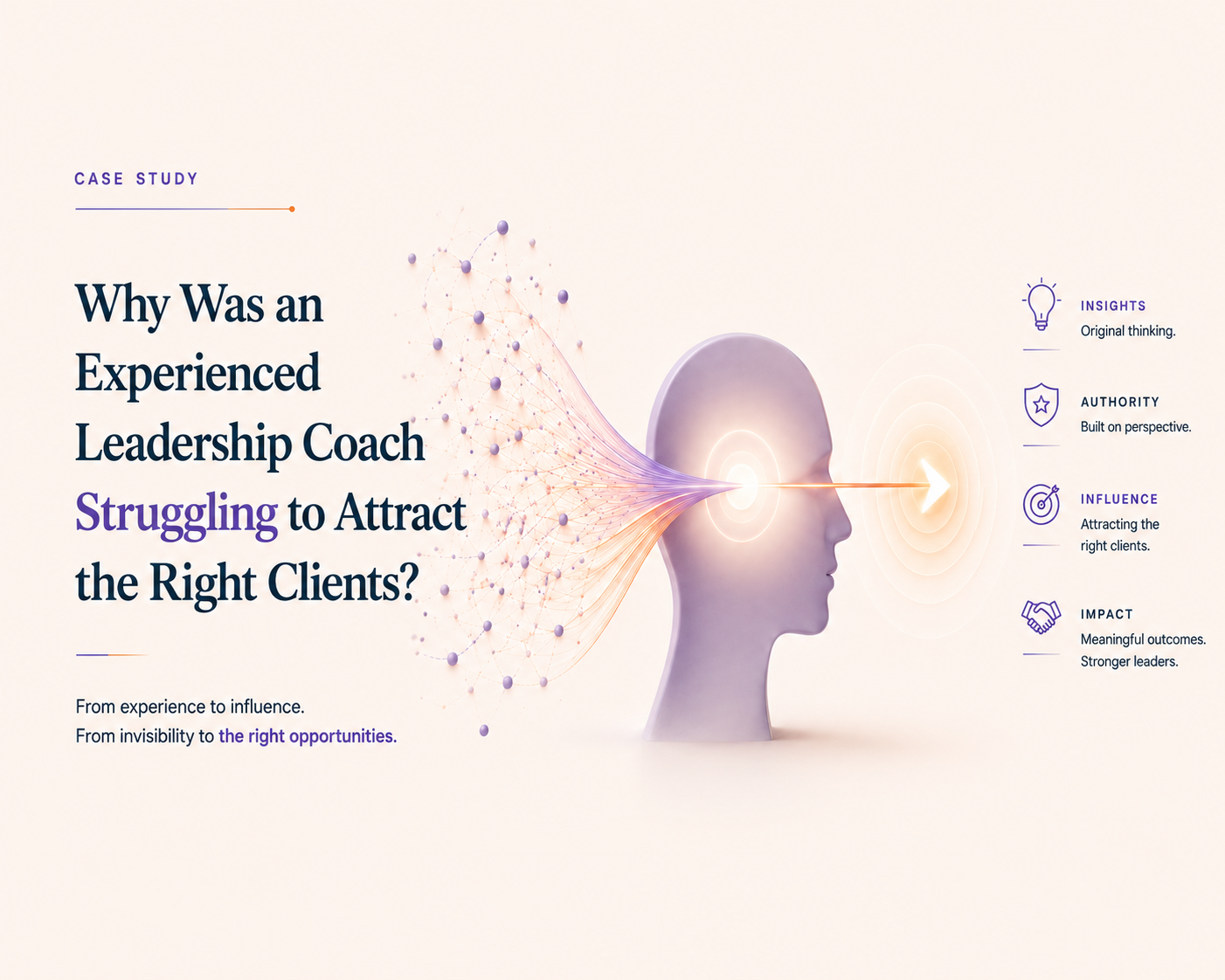
Many coaches possess decades of leadership experience, deep subject matter knowledge, and proven frameworks that create meaningful client outcomes. Yet expertise alone does not guarantee visibility, authority, or commercial growth. This was the challenge facing a UK-based leadership coach who had spent years helping senior professionals and business leaders navigate complex leadership challenges but struggled to consistently attract the type of clients he was best equipped to serve.
What initially appeared to be a marketing challenge ultimately became a positioning and thought leadership challenge.
Industry
Founder-Led Businesses
Location
United Kingdom
Services Delivered
Founder & Executive Thought Leadership
Brand & Positioning Communication
Website Communication & Digital Presence
Authority Content Strategy
LinkedIn Thought Leadership
Client Background
The client was an experienced leadership coach working with senior professionals, business owners, and emerging executives across multiple industries.
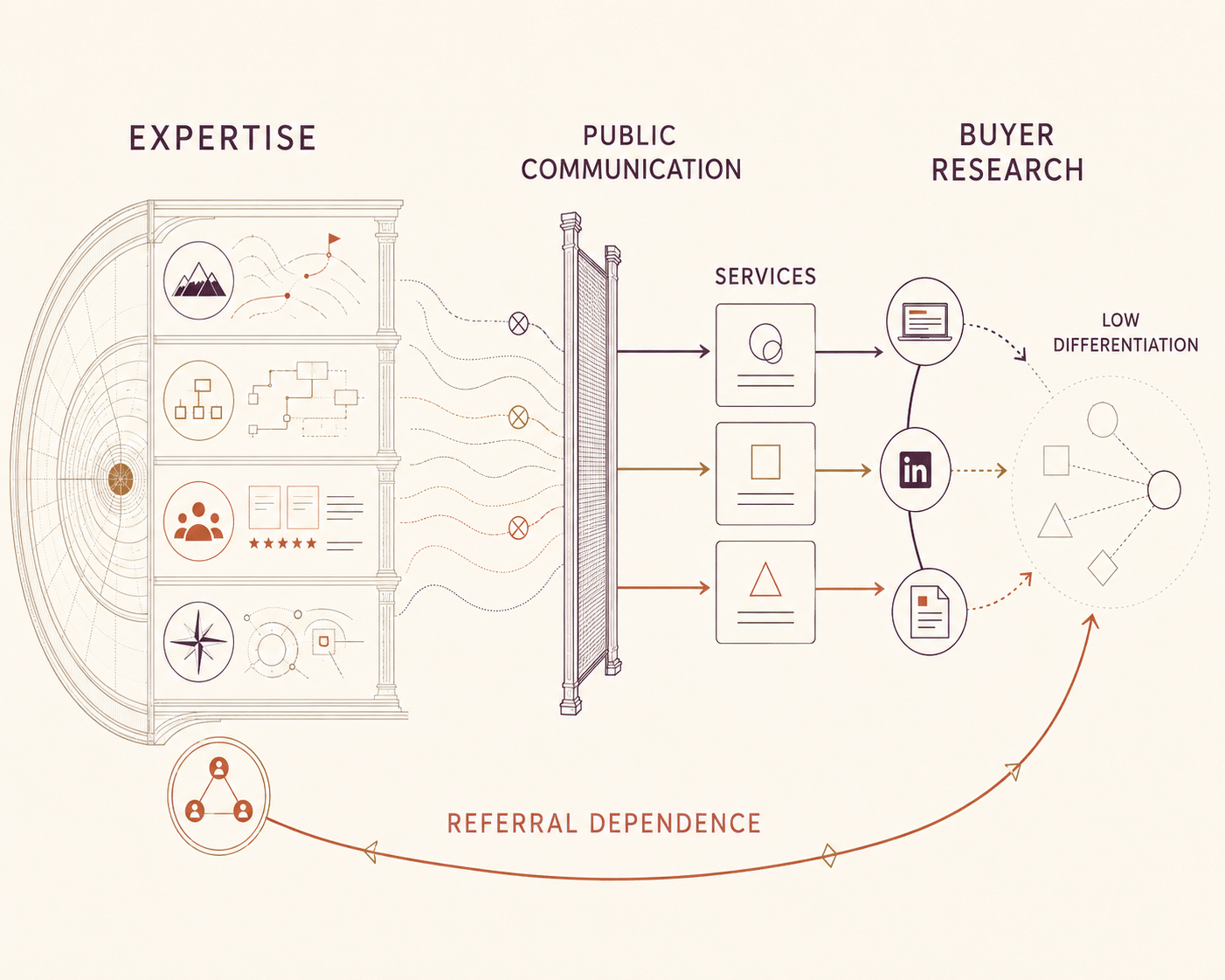
Over the years, he had developed strong methodologies, delivered successful coaching engagements, and built a reputation through referrals and professional networks.
The challenge wasn’t capability.
The challenge was visibility.
Most new clients arrived through existing relationships rather than through his digital presence. While his website explained his services, it did little to communicate the depth of his experience, perspective, or coaching philosophy.
As the coaching industry became increasingly crowded, more professionals entered the market positioning themselves as leadership experts, executive coaches, and business mentors.
The leadership coach knew he was delivering meaningful outcomes.
The market simply couldn’t see enough evidence of it.
The Challenge
The client initially approached us looking for support with content creation and LinkedIn activity.
His assumption was straightforward:
“I need to be more visible online.”
However, after auditing his website, LinkedIn profile, communication assets, content strategy, and client journey, we identified a deeper challenge.
The problem wasn’t content.
The problem was positioning.
His communication primarily focused on:
- Coaching programs
- Session structures
- Service offerings
- Credentials
- Experience summaries
While these elements were important, they failed to answer critical questions prospective clients were asking:
- What makes his leadership perspective unique?
- Why should executives trust his advice?
- What does he believe about leadership?
- What types of leaders does he help best?
- What outcomes can clients realistically expect?
The market could see a coach.
It could not clearly see a thought leader.
Our Diagnosis
The audit revealed a common challenge among experienced professionals.
Years of expertise existed.
Very little of that expertise had been converted into visible authority.
This created three key gaps:
- Strong experience but limited thought leadership presence
- Service-focused communication instead of perspective-driven communication
- Expertise trapped inside client conversations rather than shared publicly
The coach had valuable insights.
The market wasn’t consistently exposed to them.
As a result, many potential clients compared him to other coaches based on credentials rather than differentiated expertise.
Strategic Intervention
Rather than simply increasing content output, we recommended an authority-building strategy centered around thought leadership and executive positioning.
The objective was to transform the coach from a service provider into a recognized leadership voice within his niche.
The engagement included:
- Authority positioning audit
- Leadership perspective development
- Thought leadership framework creation
- Website communication strategy
- LinkedIn positioning and content architecture
- Content pillar development
- Founder narrative refinement
- Digital authority ecosystem design
What Changed?
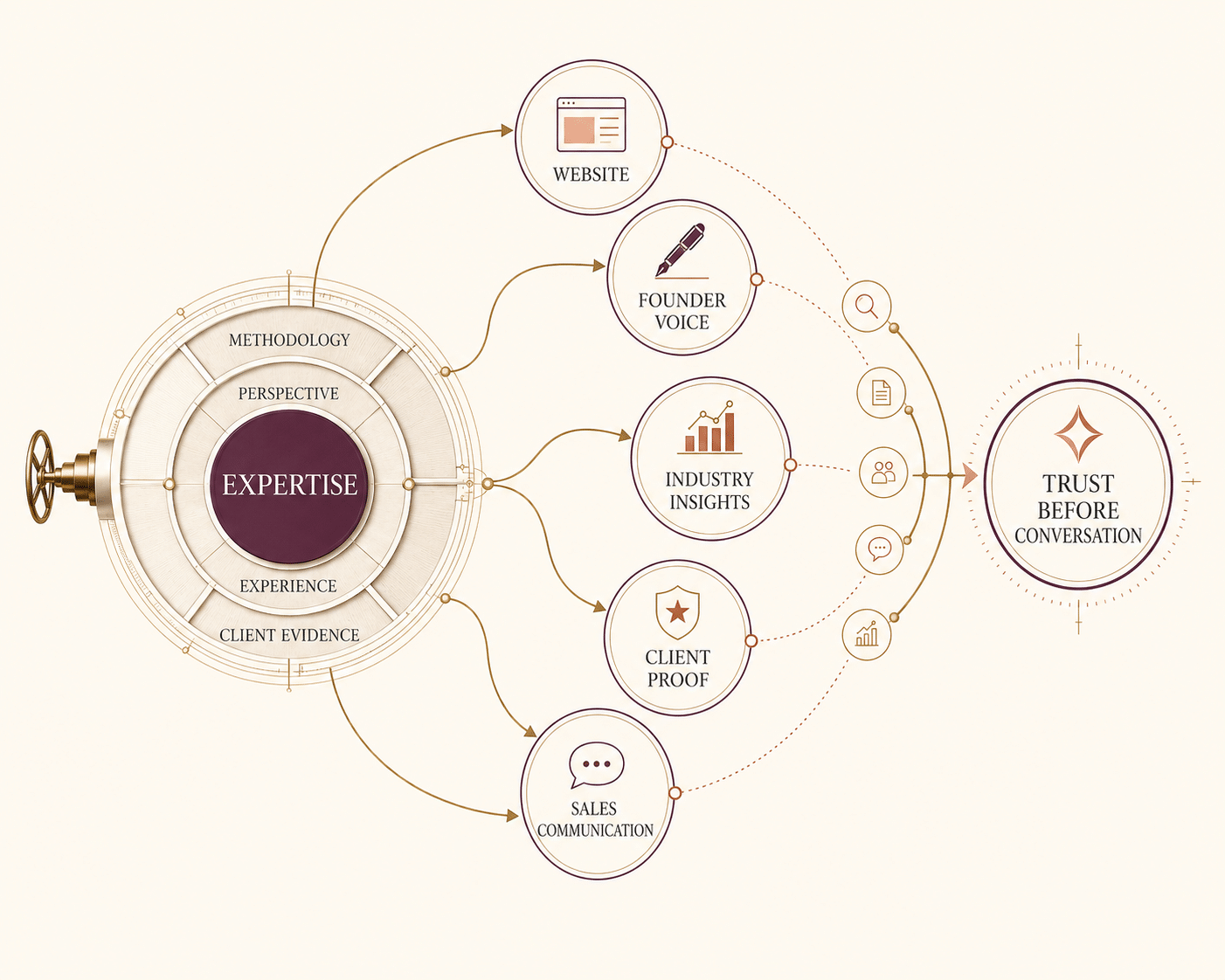
The first shift involved changing what the coach communicated publicly.
Instead of focusing primarily on services and programs, the communication strategy began highlighting perspectives, insights, and observations about leadership itself.
The revised authority strategy focused on:
- Leadership decision-making
- Executive communication
- Organizational influence
- Team performance
- Leadership blind spots
- Career progression and executive growth
The website was restructured to communicate expertise before services.
LinkedIn became a platform for sharing original thinking rather than promotional content.
A structured thought leadership framework was introduced to help consistently publish insights, observations, and leadership perspectives.
Long-form articles, executive commentary, and opinion-led content positioned the coach as an expert with a distinctive point of view rather than simply another service provider.
The objective was not to become more active online.
It was to become more authoritative online.
Business Impact
The repositioning created stronger alignment between the coach’s expertise and how prospective clients perceived him.
Key outcomes included:
- Stronger authority within the leadership coaching space
- Greater visibility among senior decision-makers
- Improved trust before discovery conversations
- Increased differentiation from competing coaches
- Stronger consistency across website, LinkedIn, and sales conversations
- Better alignment between expertise and market perception
Most importantly, prospective clients began engaging with the coach’s ideas before engaging with his services.
Leadership Insight
Many experts believe authority comes from experience.
In reality, authority comes from visible expertise.
The professionals who attract the strongest opportunities are often not the most experienced.
They are the ones who consistently share their thinking, demonstrate their perspective, and help their audience understand how they see the world.
Thought leadership is not about publishing more content.
It is about making expertise impossible to overlook.