
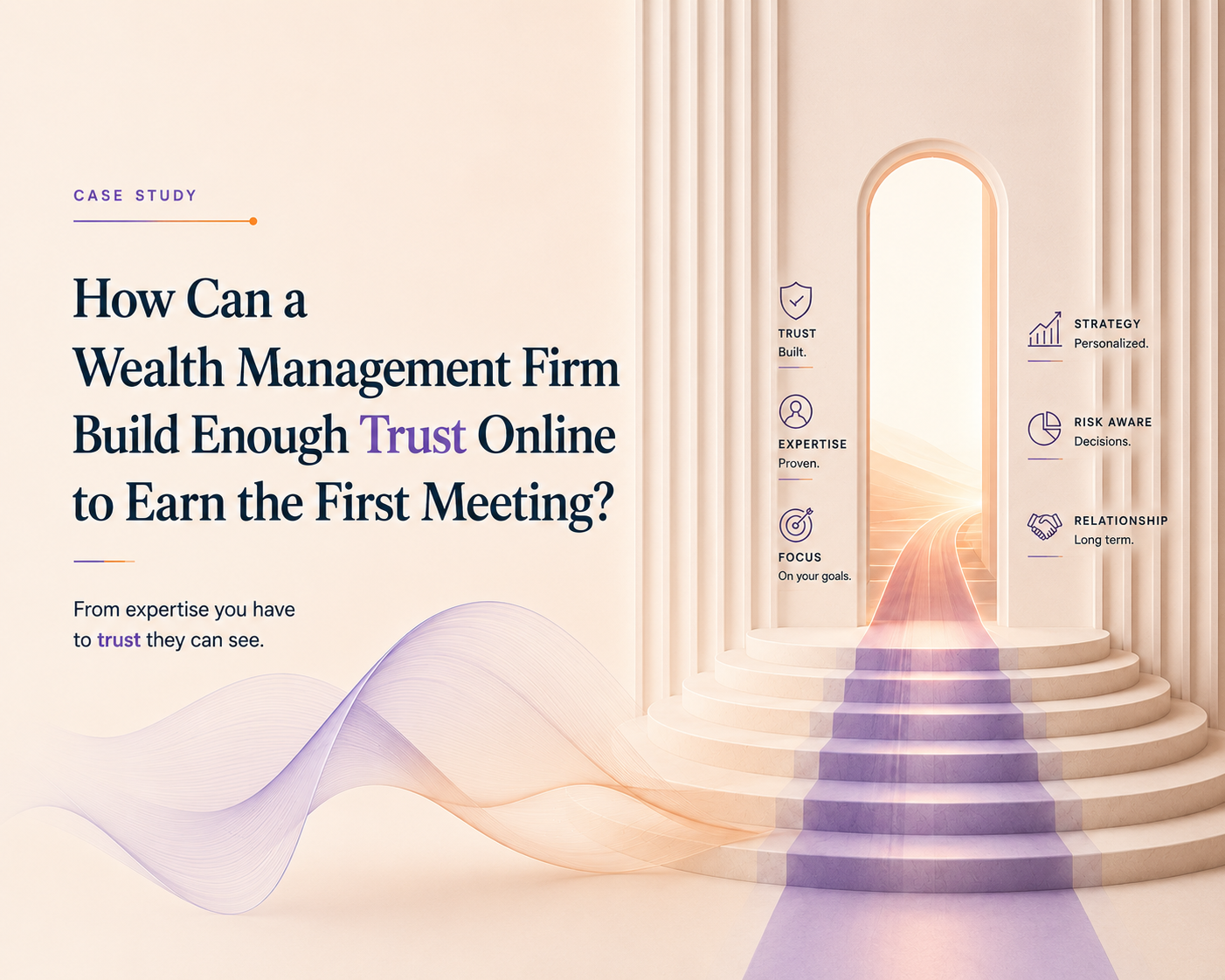
Before a prospective client shares their financial goals, investment concerns, or long-term aspirations, they are already evaluating trust. They visit websites, review LinkedIn profiles, consume content, and compare multiple advisors before deciding whether a conversation is worth their time. This was the challenge facing an India-based wealth management firm that had built strong client relationships over the years but struggled to translate its credibility into a compelling digital presence. What initially appeared to be a marketing challenge turned out to be a trust and authority-building challenge.
Industry
Finance & Wealth Management
Location
India
Services Delivered
Brand & Positioning Communication
Website Communication & Digital Presence
Founder Thought Leadership
Authority Content Strategy
Sales & Strategic Communication Assets
Client Background
The client was an established wealth management firm serving working professionals, business owners, senior executives, and high-net-worth individuals.
Over the years, the firm had built a loyal client base through personalized financial planning, investment advisory, retirement planning, and long-term wealth creation strategies. Much of its growth came through referrals and long-standing client relationships.
The expertise was unquestionable.
The challenge was visibility.
While existing clients trusted the firm, prospective clients had very little information available online to help them build confidence before initiating a conversation.
As competition increased across the financial advisory industry, the leadership team realized that credibility was no longer built only through referrals. Prospective clients were conducting extensive online research before deciding whom to trust with their financial future.
The firm’s digital presence was not keeping pace with how modern clients made decisions.
The Challenge
The client initially approached us seeking support with website communication and sales collateral.
Their concern was straightforward:
“We know we’re good at what we do. The challenge is helping prospective clients see that before they meet us.”
Once we audited their website, LinkedIn presence, communication assets, sales materials, and client journey, a deeper issue emerged.
The problem wasn’t expertise.
The problem was visibility of expertise.
The website focused heavily on:
- Financial services
- Product categories
- Investment solutions
- Industry terminology
- Technical capabilities
However, it did very little to answer the questions prospective clients were actually asking:
- Why should I trust this firm?
- What makes them different from other advisors?
- How do they think about wealth creation?
- What is their investment philosophy?
- Who are they best suited to serve?
- What kind of experience can I expect as a client?
The business had authority.
Its digital presence did not.
Our Diagnosis
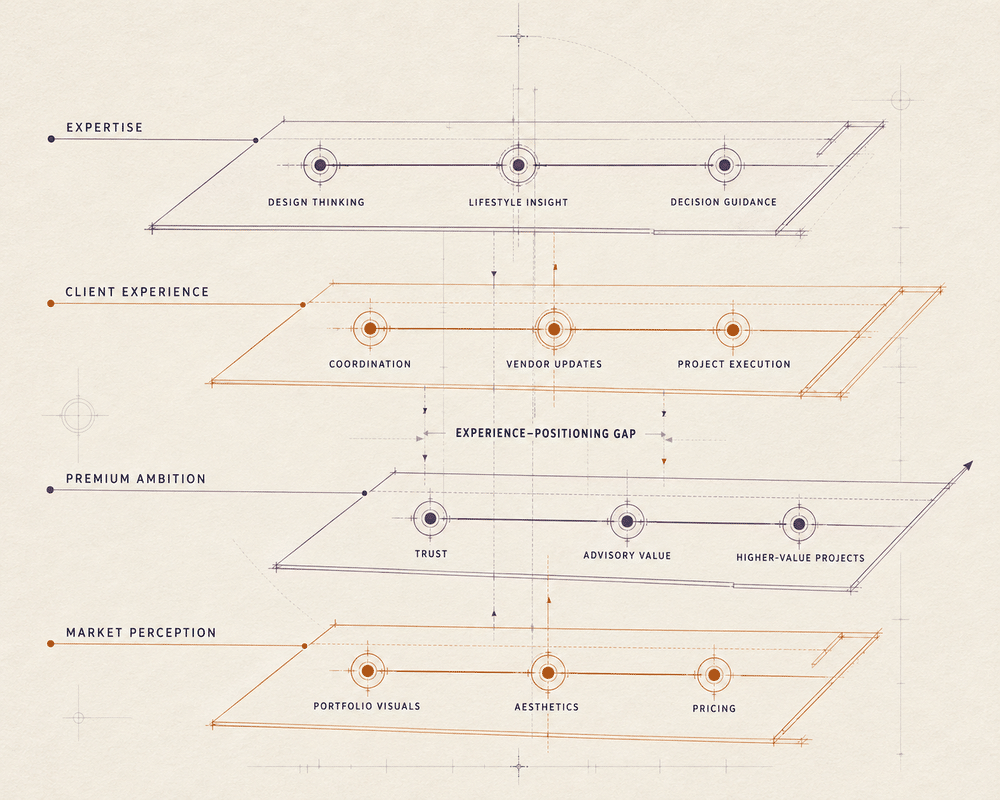
The audit revealed that the firm was communicating from the perspective of a financial advisor rather than from the perspective of a prospective client.
This created three critical challenges:
- Strong expertise but limited visible authority
- Service-focused communication instead of trust-focused communication
- Heavy reliance on referrals despite growing digital decision-making
The firm was explaining financial products and services.
Prospective clients were looking for confidence, clarity, and reassurance.
There was a gap between what the business knew and what the market could see.
The leadership team did not have a lead-generation problem.
They had an authority perception problem.
Strategic Intervention
Rather than improving isolated communication assets, we recommended a broader authority-building and positioning initiative.
Our objective was to help the firm establish trust long before the first meeting took place.
The engagement included:
- Brand positioning audit
- Messaging architecture development
- Website communication strategy
- Founder authority positioning
- LinkedIn thought leadership framework
- Educational content strategy
- Client journey trust mapping
- Sales communication refinement
- Authority-led content planning
What Changed?
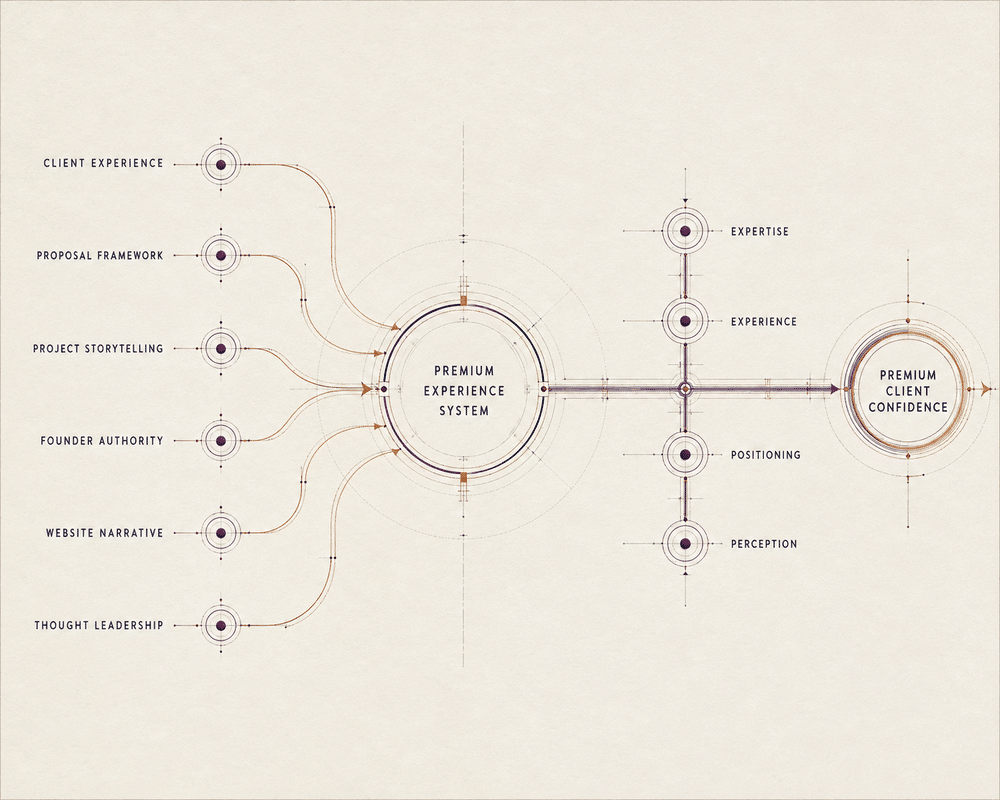
The first shift involved repositioning the firm’s communication around trust rather than transactions.
Instead of leading with services and products, communication began focusing on outcomes, expertise, and decision-making guidance.
The revised narrative emphasized:
- Long-term wealth creation
- Financial confidence
- Evidence-based investment decisions
- Personalized advisory relationships
- Risk-aware planning
- Goal-oriented financial strategies
The website was restructured to address trust-building questions before introducing services.
Founder expertise became a visible part of the brand through thought leadership content, industry insights, and educational perspectives.
A structured authority-building strategy was introduced across digital platforms, helping the firm consistently communicate its expertise beyond client meetings.
Educational articles, founder insights, market perspectives, and investor-focused resources became important trust-building assets.
Sales communication was redesigned to simplify complex financial concepts and create greater confidence among prospective clients.
The objective was not simply to generate traffic.
It was to make expertise visible.
Business Impact
The repositioning helped create stronger alignment between the firm’s expertise and how prospective clients perceived the business.
Key outcomes included:
- Stronger digital authority and market credibility
- Improved trust-building before discovery calls
- Better quality conversations with prospective clients
- Increased confidence during first meetings
- Greater consistency across website, LinkedIn, and sales communication
- Stronger differentiation in a competitive advisory market
Most importantly, the firm stopped relying solely on referrals to establish credibility and began building trust through a deliberate authority-led digital presence.
Leadership Insight
Wealth management is ultimately a trust business.
Most prospective clients decide whether they trust an advisor long before they schedule a meeting.
The question is no longer whether a firm has expertise.
The question is whether its digital presence makes that expertise visible.
The firms that consistently earn trust are not always the most visible.
They are the ones that make their credibility impossible to ignore.